iPlum: 2nd Phone Number App
- 3.8
- Rating
- 1.00M
- Installs
- Free
- Price

 Analysis by App-foxy
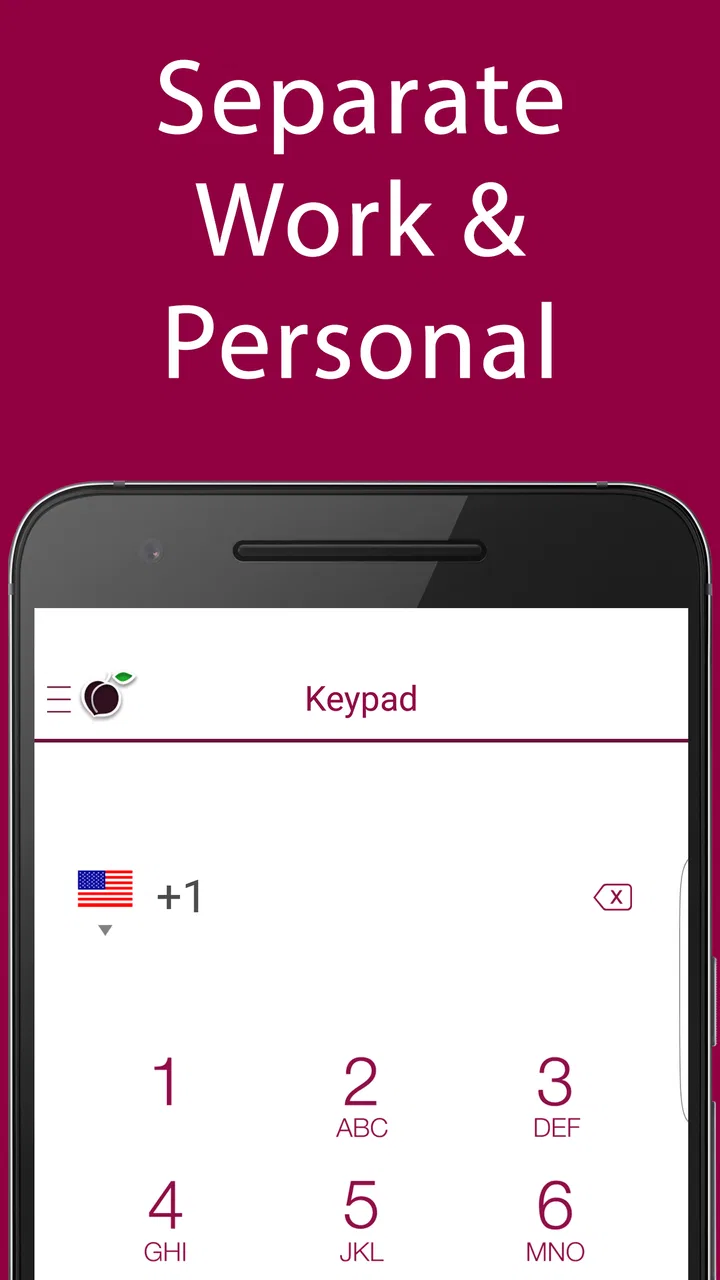
I use a second number when I want to separate work, selling, appointments, or public contact from my personal phone line. That is the space where iPlum: 2nd Phone Number App makes sense: it is a business-focused app from iPlum that gives your phone another number without requiring a second handset. The idea is simple, but the practical value depends on how much separation you need and whether the available paid options fit your routine.
The app is free to install, rated for Everyone, and has grown to more than a million installs. Its average rating is 3.8 from around 7,300 ratings, which tells me it has broad appeal but also some uneven experiences behind it. I would not treat it as a universal replacement for a dedicated business phone. I see it more as a flexible extra line for people who need a clear boundary between personal communication and a small professional activity.
How iPlum works as a practical second line
The most useful way to think about iPlum is not as another messaging app, but as a separate contact channel living on the phone you already carry. That distinction matters. A personal number often ends up everywhere: on forms, customer inquiries, marketplace listings, appointment requests, and work conversations. A second number lets me keep those situations away from my private line while still using one device.
You May Also Like

 Blood Strike: 2.5 Anniversary
Blood Strike’s Loadouts Turn Every Drop Into a Tactical Gamble
A close look at Blood Strike’s custom loadouts: how fast access to signature weapons reshapes its battle royale rhythm, rewards preparation, and narrows the gap between fights.

 Pandora - Music & Podcasts
Pandora’s Music Is Easy to Start, but Harder to Recover
Pandora’s strength is its low-effort path from a seed to a station. Its weak spot is how much confidence it asks you to place in connection, setup, and quiet recovery.

 8 Ball Pool
 Is Built on Rivalries, Rematches, and Routine
A close look at the rivalries, rematches, shared routines, and unanswered safety questions that turn a quick pool match into a persistent mobile community.

 Samsung Music
’s Quiet Strength Is Playing What You Already Own
Its reach comes less from spectacle than from dependable access to a personal library. That simplicity is both the app’s strongest retention engine and its ceiling.

 AccuWeather: Weather Radar
AccuWeather Review: A Quick, Clear Forecast for Everyday Decisions
For everyday plans, the best forecast is the one you can understand quickly. AccuWeather makes rain timing, radar, and local conditions easy to act on, with a few trade-offs.

 Hill Climb Racing
Why Hill Climb Racing Still Turns Crashes Into One More Run
A tiny car, a bumpy hill and one more upgrade: Hill Climb Racing keeps resurfacing because its simple chaos makes every near-miss feel personal.
More From Our News Desk



For a freelancer, tutor, cleaner, consultant, landlord, or small seller, that separation can be worthwhile even if the work is occasional. I can present one number during business hours, keep personal contacts on the original line, and avoid handing out my main number to people I may never speak with again. It also makes changing roles easier. If I stop offering a service, the public-facing number is no longer tied as closely to my personal identity.
The developer is iPlum, and the app belongs in the Business category rather than the general social or entertainment space. That focus shows in the way I would use it: as a communication layer for work, not as a replacement for every phone function. The current version is 6.4.2, and it supports devices running at least OS 9, which keeps the compatibility requirement relatively approachable for older supported phones.
The free starting point and what paid value means
The app itself is free, so trying the basic experience does not require an upfront purchase. That is important for someone who is still deciding whether a second number will actually improve their workflow. I can test the concept before committing to a long-term phone arrangement or buying another device.
There are in-app purchases ranging from $0.99 to $35.99 per item. I would read that range as a sign that the free download is an entry point rather than a guarantee that every useful business need will remain free. The exact value depends on which purchase applies to the way I plan to use the number, so I would check the in-app options carefully before treating the app as a complete low-cost phone system.
This is where iPlum needs a more careful value judgment than a simple “free or paid” label. Free access is helpful for experimenting, occasional contact, or a light personal-project line. Paid value becomes easier to justify when the number is connected to income, client trust, or a repeated daily process. If I only need to post a number once and receive rare calls, spending money may not make sense. If missing a work message creates a real problem, the cost can be easier to defend.
I also would not compare the purchase range directly with the cost of a full mobile plan without considering what I actually need. A separate carrier line may provide more traditional independence, while iPlum offers the convenience of keeping the second line inside the same phone. The cheaper-looking option is not automatically the better one if it leaves me without the particular communication behavior my customers expect.
A realistic everyday workflow
Imagine I run a small repair service from home. I do not want my personal number printed on a local advertisement, but I also do not want to carry another phone. I can use the second number for inquiries, return calls, and customer follow-up, while my private line remains reserved for family and trusted contacts.
The real benefit is not merely having extra digits. It is the ability to create a deliberate routine around that line. I can tell customers to use the business number, review those conversations when I am ready to work, and stop treating every unknown call to my personal phone as urgent. That boundary can reduce interruptions even when the total number of calls stays the same.
A similar workflow fits a job seeker who wants a number for applications, or a marketplace seller who needs to communicate with buyers without exposing a main personal line. In both cases, the second number is useful because the contact relationship may be temporary. I would still keep records of important conversations elsewhere when needed, rather than assuming the app alone is a complete customer-management system.
One non-obvious advantage is the ability to make a public-facing number disposable in practice, even if I continue using it for a meaningful period. When a project ends or a listing becomes too noisy, I can stop giving that line new exposure instead of having to reorganize every personal account attached to my main number. That is a small operational improvement, but it is often more valuable than the novelty of simply owning another number.
Where it beats the usual alternatives
The obvious alternative is carrying a second phone. That approach gives stronger physical separation, but it adds another device to charge, update, protect, and remember. For someone who needs one extra business identity rather than a fully independent mobile setup, iPlum is more convenient because the second line stays with the phone already in my pocket.
Another alternative is using a regular messaging service with a separate profile. That can work for people whose contacts already prefer that service, but it may not feel like a normal business phone channel. A second number is easier to put on a printed card, a service listing, or an appointment message because it behaves more like a phone contact than a username.
A carrier-provided extra line can be a stronger choice when I need the most conventional phone arrangement, predictable network behavior, or a line that remains independent from an app-based workflow. I would choose that route for a larger operation, a phone that must be shared among staff, or a situation where losing access to one handset would create serious disruption.
iPlum occupies the middle ground: more separate than using a personal number everywhere, less cumbersome than carrying another phone, and potentially less complete than a dedicated business telephony setup. That middle position is its strength, but it is also why I would not recommend it automatically to every business user.
Tradeoffs I noticed before relying on it
The first tradeoff is simplicity versus certainty. A second-number app is convenient, but it adds another layer between me and ordinary phone communication. I need to pay attention to which line I am using, where replies are going, and whether my habits match the app’s workflow. That is manageable for a solo user, but it becomes more important when several people need access or when communication must be tightly controlled.
The second tradeoff is cost clarity. Since the download is free but in-app purchases are available, I would not build a budget around the word “free” alone. I would first decide whether I need occasional use or a dependable business channel, then inspect the relevant purchase before publishing the number widely. A low initial commitment is useful, but changing systems after customers already know the number can be inconvenient.
The third tradeoff is expectation management. Customers may assume every business number is monitored continuously. A second line helps me separate work from personal life, but it does not automatically create office hours, a response policy, or a customer database. I still need to tell people when I respond and keep a simple backup process for important requests.
I would also avoid treating an app-based number as the only route for sensitive or high-stakes communication without first testing it in my own routine. The right choice depends on how reliable and immediate my conversations need to be. For casual inquiries, side work, and temporary public contact, the convenience can outweigh the extra layer. For critical operations, I would want a more robust communications plan rather than relying on one app alone.
Small habits that make the second number more useful
I recommend deciding on the purpose of the number before choosing where to publish it. A line for clients should not automatically become the line for online listings, personal acquaintances, and every sign-up form. Keeping its role narrow makes it easier to understand why it is ringing and helps preserve the separation that motivated the download.
I would also create a simple response rhythm. For example, I might review the business line at the start and end of each work period instead of checking it every few minutes. This turns the second number into a boundary rather than another source of constant alerts. The app cannot create that discipline for me; the value comes from pairing the number with a clear habit.
Another useful tactic is to use the line for qualification, not just contact. If someone reaches out about a service, I can keep the initial conversation on the business number and move only established relationships to my preferred long-term channel. That reduces the chance that every short-lived inquiry permanently enters my private contact circle.
Before paying for extended use, I would test the complete path: receive an inquiry, respond, call back, identify which line is active, and confirm that the process feels natural while I am busy. Many second-number problems are not about the existence of the number; they come from confusion at the moment a response is needed. A short trial workflow can reveal that friction before the number appears on business materials.
Who will get the most from iPlum?
I think iPlum is best for solo professionals and small side businesses that need a recognizable second contact point without carrying another phone. It is especially sensible when the work is run by one person, the volume is moderate, and the main goal is separating public or professional contact from private communication.
It can also suit people who are testing an idea. Someone starting tutoring, local delivery, home services, or freelance consulting may not know whether the activity will last. A free download gives that person a low-commitment way to explore the workflow before investing in a more formal phone setup. The purchase range means I would still examine the cost of the intended use, but the entry barrier is lower than buying a separate handset and plan.
I am less enthusiastic about it for teams, call-heavy businesses, or organizations that need shared ownership of a number. In those cases, a dedicated business phone service may offer a clearer structure. I would also skip it if my only goal is to hide my number for a single private call; creating a lasting second-line routine may be unnecessary for such a narrow need.
People who dislike managing multiple communication identities may find the separation more annoying than helpful. The app solves the problem of having another number, not the broader problem of organizing conversations. If I already miss messages on one line, adding another may increase the chance of overlooking something unless I establish a reliable review schedule.
My final buying decision
I would recommend trying iPlum when the main need is a practical buffer between personal life and small-scale business communication. Its free installation makes experimentation reasonable, and the second-number concept is genuinely useful for freelancers, sellers, applicants, and service providers who want one phone with a more professional boundary.
I would be more cautious about paying until I know exactly how heavily I will use the line. The available purchases run from $0.99 to $35.99 per item, so the right value depends on the option I choose and the importance of the number to my work. I would not purchase simply because a second number sounds convenient; I would purchase when the separation saves time, protects my personal contact channel, or makes customer communication easier to manage.
With a 3.8 average and around 1,200 written reviews, the app looks useful but not flawless. That matches my judgment: it is a focused tool with a clear purpose, not a complete substitute for a full business communications system. The age rating of Everyone also makes it broadly approachable, while the minimum OS requirement of 9 means many older devices can still be considered.
My verdict is to try it for a defined use case, test the full call-and-message routine, and then decide whether the paid path earns its place in the budget. Choose iPlum for convenient separation on one phone; skip it when you need a fully independent carrier line, team infrastructure, or a communication system with no extra management. For the right solo user, that distinction is enough to make the app worthwhile.
FAQs for iPlum: 2nd Phone Number App
01What is iPlum: 2nd Phone Number App used for?
iPlum provides a separate business or personal phone number on your existing smartphone. After installing the app, you can make and receive calls, send text messages, manage voicemail, and keep another number apart from your primary mobile line. It can be useful for freelancers, small businesses, remote workers, online sellers, or anyone who wants better privacy when communicating.
02Can I use iPlum without changing my current mobile number or phone plan?
Yes, iPlum is designed to work alongside your regular mobile service rather than replace it. The app uses your phone’s internet connection through Wi-Fi or mobile data for many of its communication features, so you can keep your existing number and carrier. However, call quality and availability may depend on your internet connection, account plan, location, and the specific features included with your subscription.
03Does iPlum offer calling, texting, voicemail, and business features?
The app combines several communication tools in one service, including a second phone number, voice calling, SMS or business messaging, voicemail, and call-management options. Depending on the selected plan, users may also find features intended for professional use, such as greetings, extensions, auto-attendant functions, call forwarding, or business-hour settings. Feature availability can vary, so reviewing the current plan details is recommended.
04Is iPlum free to download and use?
Downloading iPlum may be free, but continued use of its phone-number and communication services generally depends on a paid subscription or selected service plan. The total cost can vary according to the number type, calling and messaging allowances, business tools, and billing period. Before signing up, check the latest pricing, trial conditions, renewal terms, and any additional charges for premium or international services.
05Is iPlum a good choice for privacy and professional communication?
iPlum can be a practical privacy tool because it lets you share a separate number instead of exposing your personal mobile line. It is also useful for maintaining a more professional identity with custom greetings and business-oriented call handling. Nevertheless, it should not automatically be treated as completely anonymous or as a replacement for emergency communication. Review its privacy policy, permissions, data practices, and emergency-calling limitations before relying on it.
Pros
- Keeps personal and work calls separate on one device.
- Supports business texting with a dedicated number.
- Voicemail can be managed without sharing your personal number.
- Useful call controls help filter unwanted business interruptions.
- Available across mobile devices for convenient number access.
Cons
- Some advanced calling tools may require a paid subscription.
- Call quality depends heavily on your internet connection.
- A second number can increase the amount of notifications.
- Setup may take time if you need custom business settings.
- International calling and messaging costs can vary by destination.

iPlum: 2nd Phone Number App
Gallery